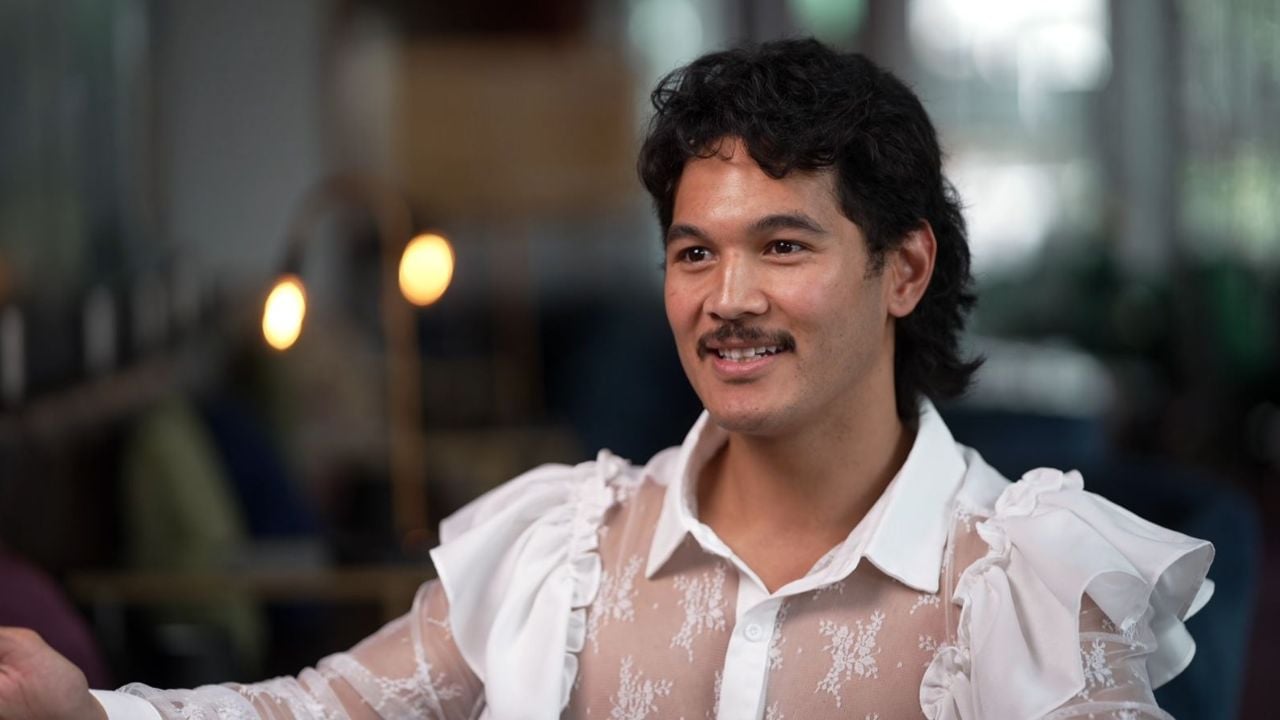
“If one kid comes to the show and goes, oh he’s Samoan I want to do what he does, then I have done my job eh.” – Theo David, playing Romeo.
It’s a play that has withstood the test of time, and has been adopted by many actors and directors and seen on numerous theatre stages around the world.
And now Shakespeare’ most famous love story is set to feature two Samoan actors in Auckland.
Romeo and Juliet is currently being showcased at the ASB Waterfront Theatre, and Samoan actor Theo David is playing the lead role of Romeo.
“People before me have done all the hard work so I can envision myself playing Romeo,” Theo says.
“Like you got Anapela, the whole Magasiva family, Beulah Koale. So you see people like them doing big things, so then it makes me as a young Samoan actor think. oh I can see myself there.”
Having starred in many projects on stage and screen, being able to lead in Romeo and Juliet is a big achievement for Theo.
But it’s a role that he believes he had been preparing for since high school.
“I went to a palagi school, so Shakespeare was part of my curriculum,” he says.
“It was my year 12 English with Miss Hamilton and she showed me this play called Othello. And Othello was about this Moor. He is an outsider, dark skin general of the army in Venice, and he is only respected there for his services to that city.
“And I was a brown boy who went to St Kents who was only there to play rugby. And I felt like I saw myself in this character and I think I get what he is going through. Then the next step was, oh what else did William Shakespeare write? I wonder what else he has done.”
Also joining Theo on stage is Jesme Fa’au’uga, who plays the character Tybalt. Unlike Theo, Jesme was not really a fan of Shakespeare in high school.
“I will be honest with you, I hated Shakespeare in school. I did not get it or understand it. It was one of those things,” Fa’au’uga says.
“But they keep on saying this thing where, like, Shakespeare has to be experienced. Like you can’t teach it that way, you can’t teach it straight off the books. I think that was kind of like the barrier for me. I am trying to read it but the words are just hard to understand.”
But now, being able to understand and even get the chance to be part of a Shakespeare work on stage, he hopes to motivate other Pasifika actors to give it a go.
“I like to think that that’s one less barrier especially for Pasifika kids to like to understand Shakesperian language,” Jesme says.
“I’m hoping that this play breaks down barriers. Not only is it something that as kids we can touch with Shakespeare, but it’s also something that we can understand.”
For both Theo and Faauuga, performing Romeo and Juliet on stage also allows them to add their own Samoan flair to their characters, finding how they both relate to the roles in their own way.
“My grandfather at Christmas time you know, when all the family would get around and he would just sit in his chair and he would just look with love to all his family running around, his little grandkids,” Theo says
“I want that when I grow up, but I also think Romeo wants that too. The tragedy of Romeo is that he doesn’t get to have that big life in the end. He doesn’t get to sit on his lazy boy and have his smoke and watch his grandkids running around.
“So I really connect to Romeo in the sense that we really just want to be big and passionate and make the most of life.”
Jesme also finds the core values of family and loyalty with Tybalt as something he relates to as a Samoan.
“With Tybalt, I understand his loyalty to his family, and the passion he carries for his family,” he says.
“It’s no different to maybe an older brother. You know how an older brother gets with his little sister, and they bring the guy home, it’s one of those dynamics. Yeah, islanders, they get this they understand this.”
Personal connections are one thing, but to leave an impact on stage and represent their heritage is another.
And as the show carries on right through to August, both actors are hoping that their performances can encourage Samoans and the wider Pacific community to understand the complexity of Shakespeare’s work.
“I just hope they see people like me, people like Jes, and not think Shakespeare is not for them,” Theo says.
“But I am aware that it does not just take me either. It takes a village to raise everyone.
“Man if one kid comes to the show, and goes oh he’s Samoan, I want to do what he does, then I have done my job eh.”