Hawaii-based Independent film maker Kimberlee Bassford decided she wanted to make a film about outspoken Samoan poet, writer and activist Sia Figiel soon after she met her in 2016.
“She was in Honolulu launching her latest novel, Free Love,” Bassford says.
“I recognised her name because I had read her books 27 years ago when I was in college and on a study abroad program in Samoa.”
As Bassford goes about promoting her film Before the Moon Falls at the DocEdge Festival in Auckland this month, Figiel is in jail in Samoa awaiting trial for the murder of fellow poet, writer and friend, the 75 year old former Hawaii University professor Caroline Sinavaiana-Gabbard.
It’s alleged, Figiel killed Sinavaiana-Gabbard in a pique of rage back in May 2024. While it came as a shock for many, especially those in the literary world, those who were close to her knew of her mental health struggles over the years.
For Bassford, having spent years working behind the scenes getting her film made with Figiel’s trust and consent, the shock of the muder could not be ignored.
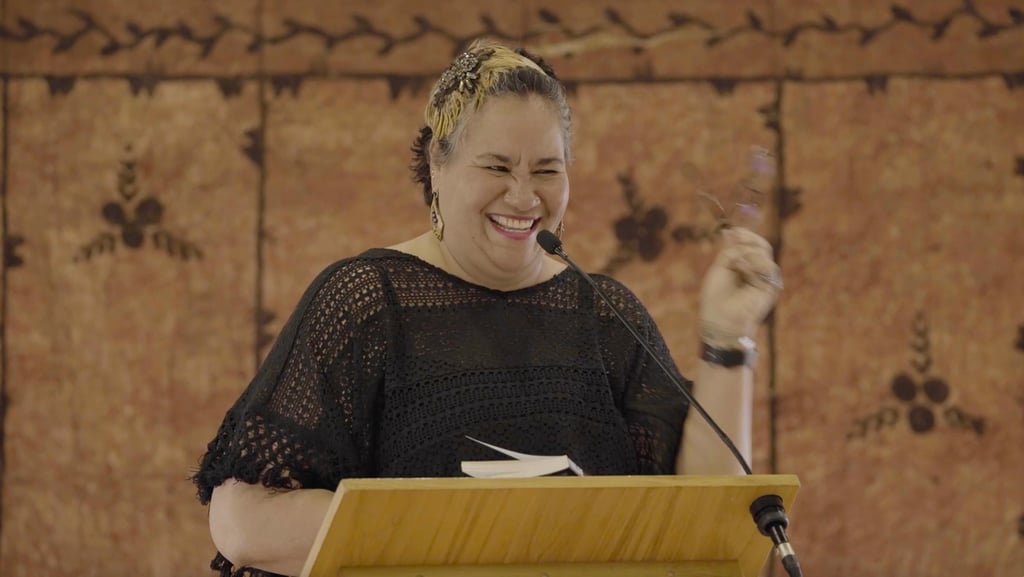
“We started this project nine years ago. And most of what we’re showing in this film is Sia’s journey leading up to this tragic event…of course we have to acknowledge it,” Bassford says,
“It’s in the film and we try to make sense of it the best way we can.”
Speaking to TP+/Tagata Pasifika, Bassford shared parts of her journey working with Sia. adding that it has been the longest film she has worked on and the hardest to make.
“I was mesmerised by her personality. She’s very larger than life, very charismatic, but also just really kind of frank and candid and she was about to do this adventure and I sort of thought, there’s probably a story in here somewhere,” Bassford says.
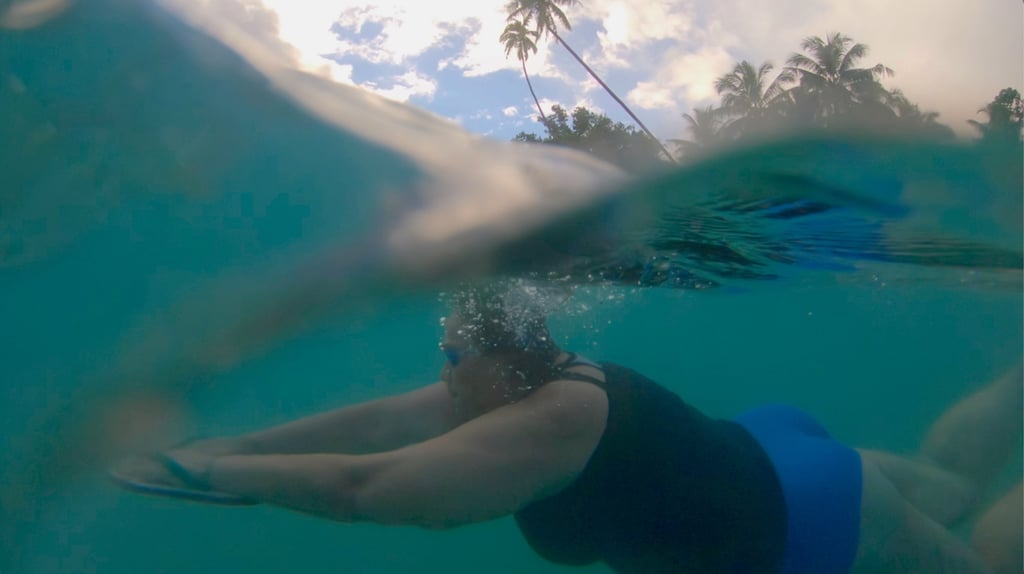
That adventure was Figiel’s plan to walk across parts of the USA to highlight issues around obesity and diabetes, a condition the poet and writer had earlier admitted to.
Bassford approached Figiel for permission to come along and film parts of her walk. From here, not only was the film born, but it signalled the start of growing a relationship between the filmmaker and author.
“That’s always sort of part of (what) the documentary process is, building trust with your participants,” Bassfors says.
“When we started, it was just filming the walk. And I think as she became more comfortable around me and the camera, she started opening up more about what she was really struggling with and that she hadn’t really talked about the mental health issues.”
Bassford says, while she is used to working on films that have taken between four to five years to produce, the reality of bringing this story to life required a lot of work.
“It’s not like I’m filming every day for nine years … you’re raising money and then filming and you know, stopping and maybe editing that footage and then raising more money.
“And so it was, during her walk, we filmed her several points along the way. And then it was just kind of staying in touch with Sia and seeing what was happening in her life,” Bassford says.
“Then she said, oh, she’s going to go to Utah and be with her family. And so I thought, Okay, well, we should film her doing that.”
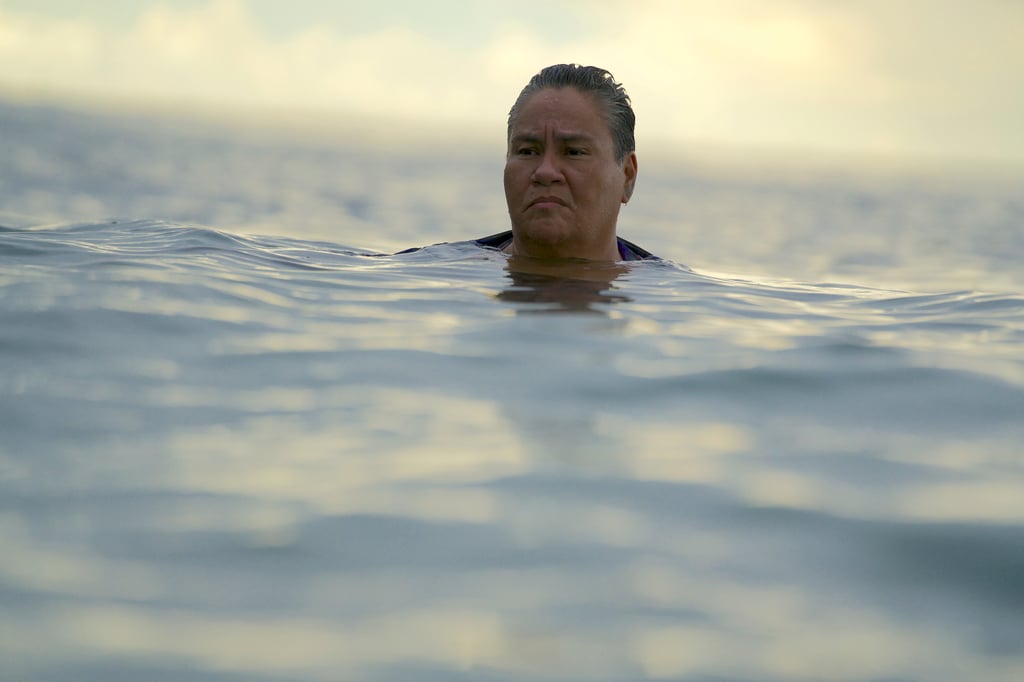
Figiel would keep the director informed of literary events and things that were happening with her physical health.
“So it was a collaboration where she would share what was going on and then we would decide whether or not that was something to film. So it was very much, off and on over nine years.”
And as Bassford explained, while it was a long haul, the journey and story would change course.
“It sort of pivoted at several points. It was about the walk and then it pivoted and became a little bit more about her initial mental health journey she was on and then it pivoted again.
“I just had to always sort of be open to where the story was going, which is part of just a documentary in general. But I felt like, with this film in particular, like I didn’t have a lot of control where it was going,” Bassford says.
“And it was just always sort of checking in with Sia and seeing where her life was taking her and then just kind of seeing if she was open to us documenting wherever it was going.
“And for the most part, she was always open to us being there at these key moments.”
Ultimately the key moment would be one of tragedy.
“When I first heard about what happened, I thought, oh my gosh, do we want to put out a film where, in the end, our main character does this, right?
“That’s hard. And we were trying to always make a compassionate portrait. And then it’s like, will people even want to watch this? Should they watch it? Should we put it out there? So it definitely crossed my mind many times,” Bassford says.
“Now it’s out in the world and people can have many different opinions and I have to be ok with that and not take anything too personally.
“This whole nine years has been a lot of ups and downs for me and you know, obviously for Sia, as you see in the film,” she says
“We tried to tell the story in as compassionate and caring way as we could. I don’t know that we always made the right choices. I had to just make the choice based on the information I had and my own sense of morality and ethics and training as a journalist … Hopefully that comes through in the film.”
While there are no immediate plans for the film to be shown in the Pacific region, including Samoa, Bassford hopes those who can watch it are able to share their learnings and opinions.
In the future she would like to hold community screenings that would allow for more indepth talanoa.
She understands that there are those who will view this with a critical eye.
“It’ll hopefully be based on them seeing the film… ‘cause I know there are also people, kind of just the fact that this film exists for some folks, wish it didn’t exist, right?
“And they have their own opinions, but they haven’t seen the film, so you know, that part’s a little hard. That you’re already getting critiques or criticisms from those who haven’t seen it.”
Members of Figiel’s family have watched the film and have been offered support and resources around mental health.
Despite this, Bassford understands this is part of the process of being a filmmaker and tackling issues.
But after such a long journey with, at times, confronting subject matter she also says it’s important for filmmakers to have their own support along the way.
She admits when she started nine years ago, she was on her own.
“Getting support yourself as a filmmaker… I guess, looking for those opportunities for mentorship and you never know where that might lead,” she says.
“And finding ways to build a team around you to support you in this process because it was difficult.”
For information around mental health services, visit:
- Need to Talk? – free, confidential support anytime: call or text 1737
- Lifeline Aotearoa – all-day phone (0800 543 354) and text (“HELP” → 4357)
- Suicide Crisis Helpline – call 0508 828 865 (0508 TAUTOKO)
- Depression Helpline – call 0800 111 757 or text 4202
- Samaritans – emotional support, call 0800 726 666
- Anxiety NZ – call 0800 269 4389 (0800 ANXIETY)