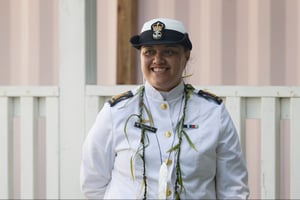
A new documentary chronicling the last nine years of murder-accused Samoan poet and author Sia Figiel makes for confronting viewing on many levels, says reporter Gladys Hartson.
When my colleague emailed through the trailer for the documentary Before The Moon Falls, about troubled Samoan poet and author Papali’i Sia Figiel, I was intrigued.
The world premiere was happening in Auckland as part of the Doc Edge Festival and it had been filmed over a span of nine years, a journey that takes place in Samoa, New Zealand, Hawaii and Mainland USA.
I ummed and ahhed about going, but after a few days, I went online and purchased tickets, which was lucky because the premiere was sold out.
I met and interviewed Sia when she was in Auckland promoting her book Free Love in 2018, a book that touched on issues of incest and sex, two taboo topics that are not openly dicussed among the Pasifika community. I assume, not widely discussed anywhere. She definitely had a presence and I noticed she held a captivated audience.
Full disclosure, I wanted to know if the documentary would touch on the tragic events of May 2024, where the award winning author was arrested in Samoa in connection with the tragic death of 75 year old Professor Caroline Sinavaiana-Gabbard.
Sia is currently in Tanumalala Prison, Samoa, awaiting her trial which is set down for August 2025.
I’ve never been to a screening for a documentary so I didn’t know what to expect. Ordinarily I would grab pop corn and a drink to watch a show, (this was not one of those times)… spoiler alert, if you are planning to see the documentary.
After seeing Before The Moon Falls, I went home and had a stiff drink.
The trailer shows a scene of a phone call between Sia and Hawaii-based director and independent film-maker Kimberlee Bassford talking about how Sia did not envision seeing her life go the way it has.
It goes back in time where we see snippets of Sia walking across parts of the USA over 11 months, to bring awareness to obesity and diabetes.
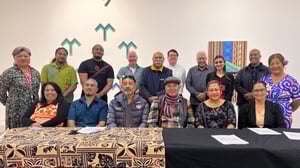
We cross to her trip to New Zealand in 2018 where she gave a reading at the Fale at the University of Auckland. Her audience is listening and hanging onto her every word. Literary giants such as Albert Wendt, Witi Ihimaera, Selena Tusitala Marsh, Alan Duff all talk about her impact as a formidable trailblazer in their field.
Then we see a very vulnerable Sia, who talks openly about living with mental health over the course of her life. Her struggle with issues of sexual abuse as a nine year old child, her relationship with her mother, the impact of her life as an author, poet and the impact of her choices and decisions that are placed on her sister and her sons, all the while coming to terms with her diagnosis of bipolar disorder.
She is trying to take charge of her mental health and her diabetes and overall health, she raises concerns with the psychologist about her fears that the medication will impact on her ability to write (it’s been around 16 years since she wrote her last book).
And then one of the most tragic and saddest outcomes from her journey – as we have all come to know – resulted in the tragic death of Professor Gabbard who appears in the doco and is seen captured as a beloved friend and mentor of Sia’s.
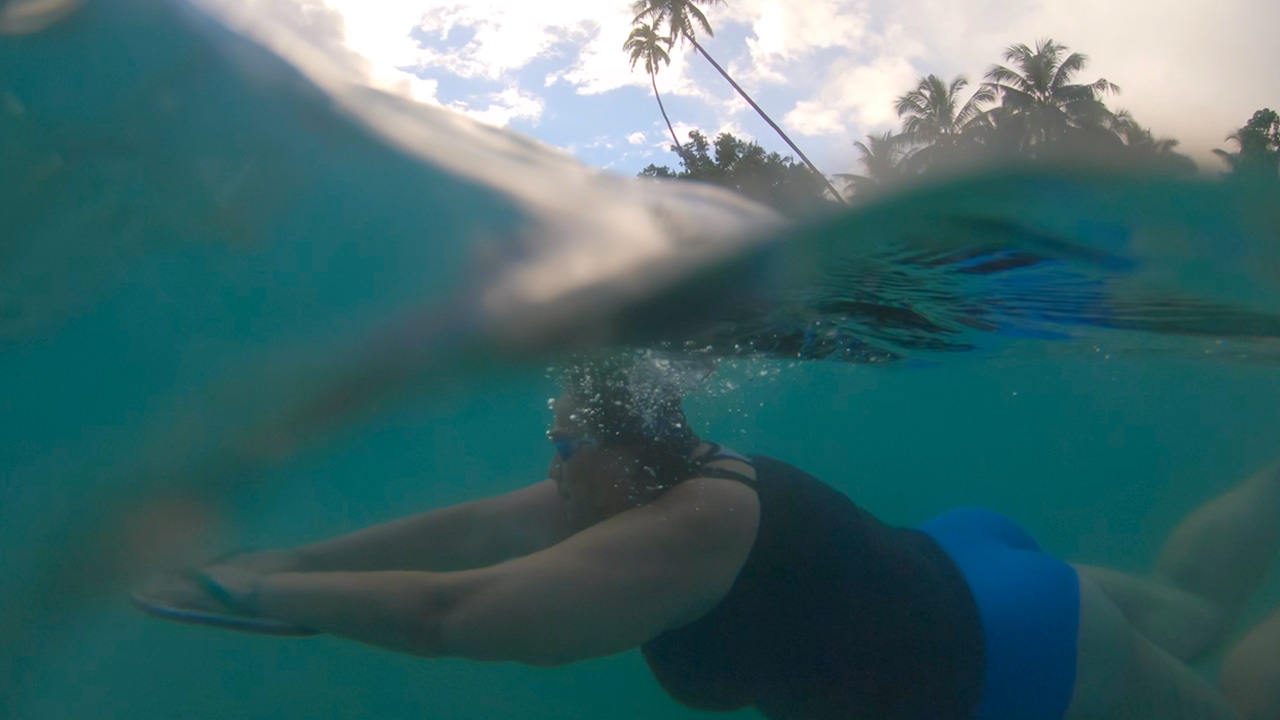
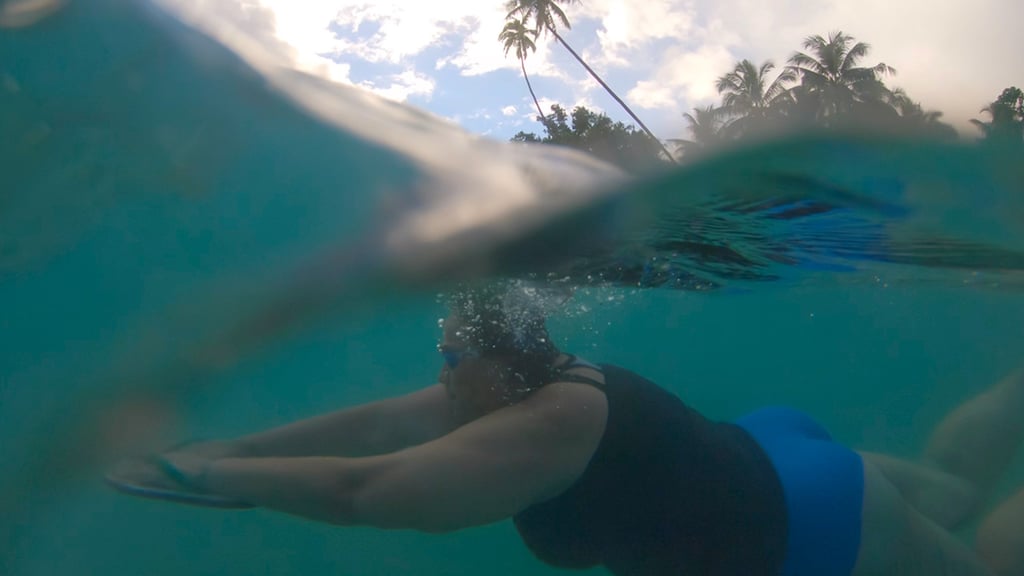
You have to watch the documentary intently because it pivots quickly, while it may seem like nine years is a long time to chronicle Sia’s journey, it really is only snap shots, it moves fast. The use of the open ocean plays a big part in Sia’s life. Her connection to the moana, with the use of animation is used to illustrate how she is feeling at the lowest and critical points of her life and you see that the ocean is her natural remedy.
The film touches on attempts she has made on her life, overdosing on insulin, travelling all over the world looking for answers, for the calm and peace that seems to elude her, which ultimately leads her back to her homeland of Samoa.
I left the theatre not feeling sympathetic towards Sia, I felt her sister’s frustration (don’t get me started on the scene with the Ifoga (traditional Samoa apology). I got angry that this award winning author and poet was not dealing with her diagnosis and appeared not to be taking her doctor’s advice and that tragically one of her biggest champions lost their life.
But who am I to judge? I don’t know anything about mental health. I don’t live Sia’s life. I have no idea or concept of what she is dealing with, what she has lived with, endured and what she has to live with now.
I was shocked that the doco did have Sia address the lead up to the death of the professor, given that the case is still pending in Samoa. I can imagine this doco will be confronting and upsetting for the family and friends of Sia and Caroline. Then there are the questions of timing, sensitivity and the conspiracy theories that are circulating online about the involvement of Samoa’s caretaker Prime Minister, Fiame Naomi Mataafa.
But I guess that is what a documentary is supposed to do, right? For those who have watched and will watch it, it will hit a nerve and has already been hotly debated. I have no doubt it will be criticised and praised equally.
Before the Moon Falls is confronting and people will be curious to watch this film. Seeing the effects of bipolar and how it’s not only not talked about by the Pacific, but society in general.
There is a lot happening in this 90 minute documentary. Mental health and the challenges of living with it and the stigma attached with it, Will this spark more talanoa and action among us about mental health? I hope it will, but likely not to the extent it needs to.
Where to get help:
- Anxiety phone line
0800 269 4389 (0800 ANXIETY)
www.anxiety.org.nz - Depression helpline
0800 111 757 or free text 4202 to talk to a trained counsellor about how you are feeling or to ask any question
www.depression.org.nz - Lifeline Aotearoa
0800 543 354 (0800 LIFELINE) or free text 4357 (HELP) (available 24/7)
www.lifeline.org.nz/services/lifeline-helpline - Suicide Crisis Helpline
0508 828 865 (0508 TAUTOKO) (available 24/7) - Supporting Families in Mental Illness
Auckland 0800 732 825 for families and whānau supporting a loved one who has a mental illness - Need to Talk?
Free call or text 1737 (available 24/7)