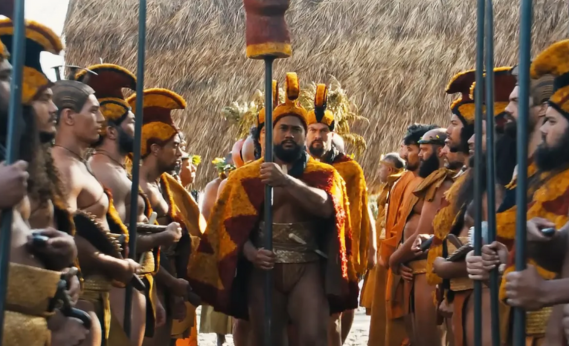
The pages of Hawaiian history come to life on an epic scale in Apple TV’s new series “Chief of War”.
Co-written and starring Kānaka Maoli star Jason Mamoa, it also features Māori acting legend Temura Morrisson and Tongan Lucianne Buchannen among its stellar cast..
The story is set at the turn of the 18th century, in pre-colonial times just before the beginning of the unification of the Hawaiian Islands.
The first two episodes are in ʻŌlelo Hawaiʻi, with english subtitles – a first in any tv series of this size.
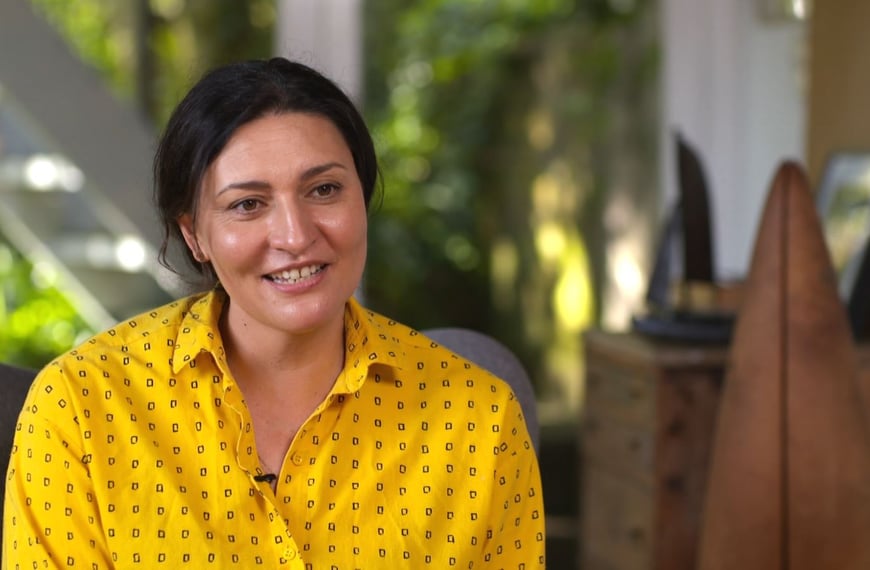
Co-creator and writer Kānaka Maoli Thomas Pa’a Sibbett was adamant that spoken Ōlelo Hawaiʻi be prominent throughout the episodes.
“Jason and I, we’re not interested in partnering with anybody that wouldn’t accept that as a criteria and a mandate and it was the only time I’ve ever seen, in a production like this, where the language was king, Hawaiian language was king,” Sibbet says.
“Hawaiians are so far behind in representation. My parents have never heard, Hawaiian language on film,” he added.
Shot in Aotearoa and Hawai’i, the landscape is of natural native ferns, mountains, bush and beaches revealing a beauty of its own. With nestled Hawaiian villages showcasing culture, traditions, customs and language, like never before.
The clever placement of prominent colour from the royal Ali’i regalia, worn by warrior chiefs and their Kuhina Nui – the ‘ahu’ula the ceremonial feathered cloaks and capes with mahiole helmets, differentiating and acknowledging the presence of royal status throughout the story.
The history of the unification of the Hawaiian islands is passionately told through the lens of Kānaka Maoli
Based on true events, Chief of War brings to life a world that proudly celebrates Kānaka Maoli’s history and the tragic events surrounding it.
Writers Sibbett and Mamoa have successfully translated onto screen the visual beauty, passion and mana they have for their Kānaka Maoli, their history and their culture.
For them it was important to be true and authentic in their storytelling, encouraging more Polynesians to do the same, while at the same time reviving Ōlelo Hawaiʻi.
“So it’s yes, this is for the next generation. We talk about that a lot. But you have to understand that this was a multi generational experience,” Sibbet says.
“When it comes to language, you know, that the language was banned. It was not something that was tolerated to be spoken in public. And so for us to now share that language on a worldwide platform, it just meant a lot.”