“It goes back to 1881, when Rotuma ceded to Great Britain. There was some internal strife back in the day and Rotuma turned to Great Britain for help” – Bruce Tizard-Varcoe
Rotumans from all over the United Kingdom and abroad celebrated a unique anniversary recently – the ceding of the tiny nation to the British 145 years ago.
Celebrated as Rotuma Day by its people around the world, those of its citizens in the UK chose to hold their celebrations at the Oak’s Golf Course Centre, in Carlshalton Surrey, last month.
Rotuma is a political dependency of Fiji, but its people are ethnically Polynesians and are fiercely proud of their cultural heritage.
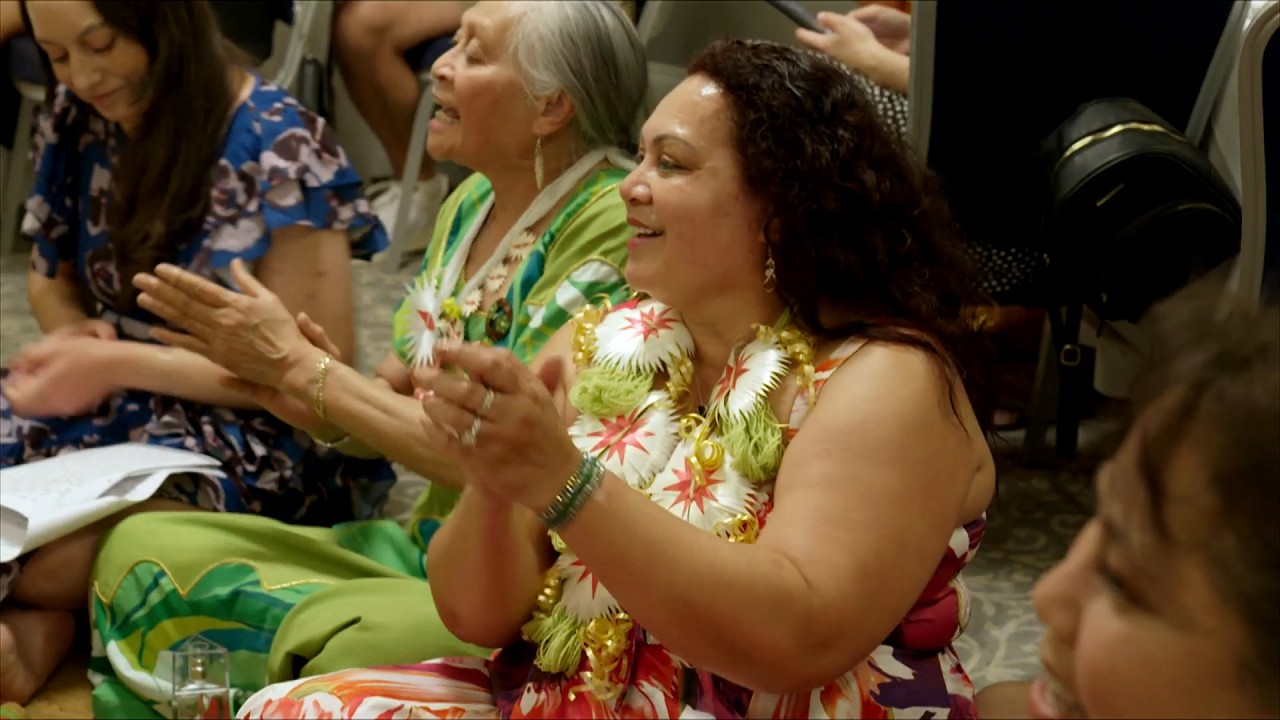
At the celebration in Surrey, Rotumans and Fijians dressed to impress in their best and floral Pacific Islands attire.
For community leader Bruce Tizard-Varcoe, who’s mother’s from Rotuma, it’s a day to celebrate his culture.
“We’re celebrating the 145th anniversary of Rotuma day. It goes back to 1881, when Rotuma ceded to Great Britain. There was some internal strife back in the day and Rotuma turned to Great Britain for help,” Tizard-Varcoe says.
“So, all these years later, here we are commemorating that time and also celebrating our language and culture.”
Travelling in from Aotearoa, the guest of honour was film and television producer Ngaire Fraser-Fuata who was born in Essex.
She says it’s a huge honour to be invited to the celebrations, recalling her childhood in the UK.
“For the Rotumans who are living here in England and being born in the late 60s, it’s very special because, when I was growing up here, there weren’t any other Rotumans,” she says.
“So, to see this community that has gathered here tonight to celebrate it is very, very special to me.”
Earlier in the week the community had a chance to view Rotuman artefacts at the British Museum in London.
“It’s mind-blowing because it was a five-year process to get to that point,” says Tizard-Varcoe.
“It was a long way to actually get there and see those historical objects; (it) was just amazing to be able to handle them as well and see them up close, it’s just incredible.”
Fijian Majorie Dunne says that it’s important to keep the legacy alive of how the Fijians and Rotuman’s came to the United Kingdom.
“I think it’s important, it’s all about legacy,” she says.
“So, it all happened back in the 1960’s when conscription stopped in the UK, Britain had to go out to the colonies and recruit.
“So, Fiji was one of them and initially there were only meant to be 100 that were recruited, but the standard was so high they ended up taking 200 men and 12 women, hence the two-one-two, and included in that contingent were Rotumans.”
Dunne says the term, the 2-1-2, has come to signify that cohort and their importance in the life of the community in the UK.
“Many Fijians and Rotumans and Pacific Islanders, have been able to be recruited into the British Army because of the calibre of the first lot that went through in the 1960s.” Dunne explained.
Many celebrating at this event are ex-British Military like fireman Kava Fullman, who followed in his grandfather’s footsteps.
“It’s been my passion, following in my grandfather’s footsteps because he served in World War two. I joined the military, I did 12years; proud of every bit that I did,” Fullman says.
“My deployment was mainly based in London. The ceremonial duties for the royal family, because I was with the First Battalion, Welsh Guards.”
Fullman now lives in Aberdeen in Scotland and has been a firefighter for almost a decade. The nine-hour drive to be at this celebration is important for him and his family.
“I think it’s very important for me now that I’ve got a ten-year-old boy. So, for me to pass on the knowledge and everything that’s been taught to me as a kid, I think it’s very important,” he says.
“Not only for myself, but every other Rotuman that lives overseas to pass on what I call, the torch. You know, pass on the culture, the knowledge.”
The community might be small, but there’s no doubt that keeping their culture and customs alive for the next generation is a priority.
“I think it’s incredibly important to everybody who is away from the island, who has grown up away from Rotuma, to stay connected to our culture and our language and our traditions,” says Fraser-Fuata.
“It’s the sense of who we are as a people seeing that here on the other side of the world is probably one of the most amazing things for me. Particularly in this country where 145 years ago, they asked for help and they’re the ones that are holding it together. They’re keeping it alive here, that far away from home.”
* Some quotes have been edited for clarity.