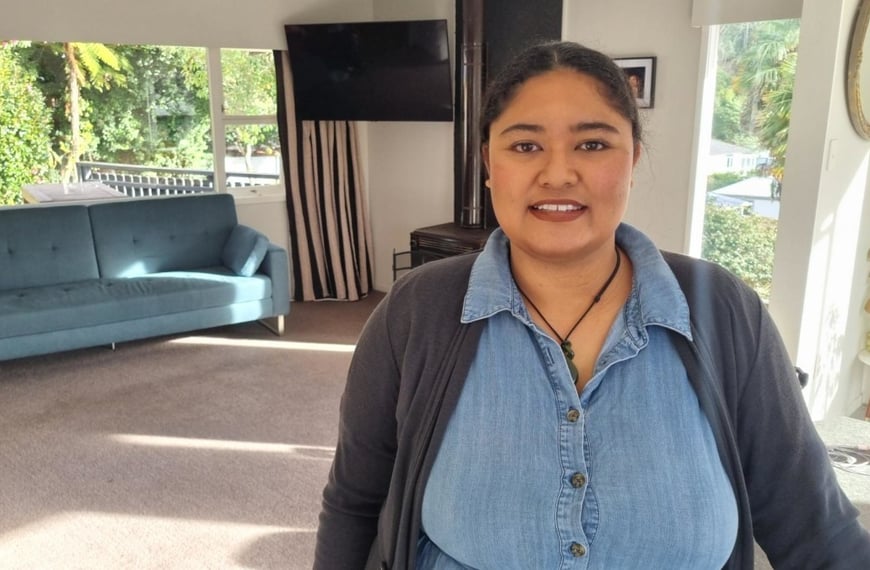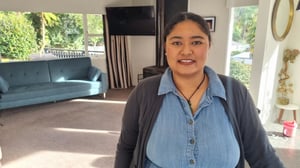

“It’s a privilege to be in this position and one I don’t take lightly. I’m always grateful when a Pasifika person comes through our doors” – Dr Asa Vete, Dentist.
For many growing up, going to the dentist for a checkup was one of the scariest things to do.
Not so much today, especially if your dentist is Tongan Dr Asa Vete who co-owns two dental surgeries, one in Papatoetoe and one in Mangere Bridge with his good friend and business partner Dr Joel Liew.
“Our brand name is ‘My Dental’, something that’s close to the two of us,” he says.
“It takes a bit of his Malaysian-Chinese heritage and my very proud Tongan heritage and we found the medium and our ‘we’ brand in our logo is a subtle touch towards those heritages and what we both bring to the service of dentistry here in our communities.” Dr Vete says proudly
The surgeries are kitted out with the latest equipment to help make patients relaxed and comfortable, especially children.
It also helps that he is fluent in his Tongan language and culture.
“Our people feel quite, quite safe in an environment where there’s someone who looks like us, at the forefront,” he says.
“It’s a privilege to be in this position and one I don’t take lightly. I’m always grateful when a Pasifika person comes through our doors.”
Dr Vete grew up in Onehunga and attended Marcellin College before heading off to Otago University. He graduated in 2014 and began working a year later for the Northland DHB.
He says, working in Northland exposed him to “community level dentistry” across small, widely dispersed and often remote places that sometimes could only be accessed by small plane. He spent two years in Northland, then decided to move back to Auckland.
“It was always a goal of mine to come back home. And so I came back and worked for the Counties Manukau DHB working, at our hospitals and Middlemore and Green Lane, Auckland, doing a different type of dentistry,” says Dr Vete
“Hospital dentistry was a different beast. You’re involved with a lot of different teams, within the health sector. Lots of acute trauma, for various reasons. And motor vehicle accidents. Someone coming off the scooter.”
Dr Vete says it was hard work but he was grateful for the skills and exposure to that part of the health system. After three years he decided to move into the private sector.
“I just thought that it made sense to come onto the other side of the fence and to the private sector. I don’t like it being called the private sector because I always saw myself working in the community.” he says.
“And unfortunately, in a clinic like this, it is considered private. So I’ve been here for the rest of my time for the last seven years.”
According to the Ministry of Health there are 55 Pacific dentists practicing in New Zealand, making up approximately 2.1% of the country’s total dentistry workforce.
Business has been good for Dr Vete but he says they need more Pacific islanders in his field.
“Probably one of the issues that Pasifika people face is not seeing someone they are comfortable with, not seeing someone they can relate to or understand their cultural needs,” he says.
“But there’s a lot of work being done by various associations in upskilling our current workforce, to be able to be culturally mindful of our Pasifika people, our Māori people, our indigenous people. But representation matters a lot in these communities here.”
Dentistry has changed for the better in 50 years and Dr Vete says good oral health care is key. A dental visit is only a smile away.
“Encourage to have good conversations with your colleagues and your friends
and families if you have had good experiences, just to share them, and to stress the importance of going in early because a lot of the treatment that we do, or the complex treatment that we do, is absolutely preventable.” he says.
“One of those little check boxes should be, get in and see your dentist, see your local dentist, and get that check-up sorted.”