E afua mai mauga manuia tetele mo le nu’u. Ae afai ua leai ni mauga, o fea a utuvai ai ia tupulaga o foufou mai? / From the high mountains are the blessings of the village. When there are no mountains, where does today’s generation seek blessings?
Happy Samoan Language Week and 64 years of freedom Samoa!
I always find that when the month of June rolls by every year, my Samoan patriotism suddenly reaches an all time high with the dual celebration of Samoan language week and the country’s Independence.
685 to the world as they say!
This year’s theme for Samoan Language Week derives from the Samoan proverb “E afua mai mauga manuia tetele mo le nu’u”.
In its literal sense, it refers to the mountains allowing nature to grow in abundance through the streams of water that fall from its peak. When used metaphorically, it emphasises the importance of having the Gagana ma le Aganuu Samoa being passed down from the mountain top (elders) to flow seamlessly into the village and its people.
Growing up in Samoa, I would come to learn that these mountains as mentioned meant a lot of places, but were mainly directed towards the high chief’s house or the seating of the village council. It is believed that the true essence or core of Samoan culture revolves around the high chiefs and village council.
You’d often hear the elders say to their children, “Alu i le fale a le matai e te poto ai – Go to the high chief’s house, it will make you smarter”.
Moving to New Zealand as I got older, I realised that a lot of the diaspora of New Zealand born Samoans felt that learning the language and culture was a struggle. At first I put it down simply to maybe it was a personal thing, and that maybe they just weren’t trying hard enough.
Then it dawned on me that, unlike back home in Samoa where we are exposed to the mountains that hold such knowledge, the majority of New Zealand Samoans had no access to the answers they were seeking about fa’asamoa.
This was something I had discussed a couple years back with orator and MIT lecturer Musuiaiga Neil Tapu Sitagata. I had come across Musu through a story I covered on our online platforms for a Samoan cultural workshop he was holding for his church youth.
Musu is no stranger to the Samoan culture and language space in New Zealand. Having crafted his knowledge growing up in his family, he now dedicates his work and time to a lot of young people who share a similar journey growing up in countries outside of the motherland.
In the oratory space, he has gone on to serve his family and village, but also on New Zealand delegations as an orator a few times on trips to Samoa. So, to put simply, Musu is a person who bridges the gap between Samoa and the generations of Samoans living in New Zealand.
When I asked Musu why he was holding the cultural workshops for his church youth, he replied that it was basically due to the lack of resources that young people could learn from.
He argued that, although parents are the main source of knowledge for those in New Zealand and Samoa, it’s workshops such as his that bring theory into practical in regards to the Samoan culture and language.
“E le na ma le laina le tulaga o iai tatou i lenei atunu’u. E leai ni fono a ni matai e faia i’inei. Tatou te silasila I o tatou ekalesia ma o tatou aulotu, o i la tatou te utuvai ai i le fia malamalama I tu ma aga o si o tatou atunu’u”
“Over here in New Zealand, we don’t have council meetings. We have to look at our churches in which we create such programs to help those in need of the Samoan culture and language.”
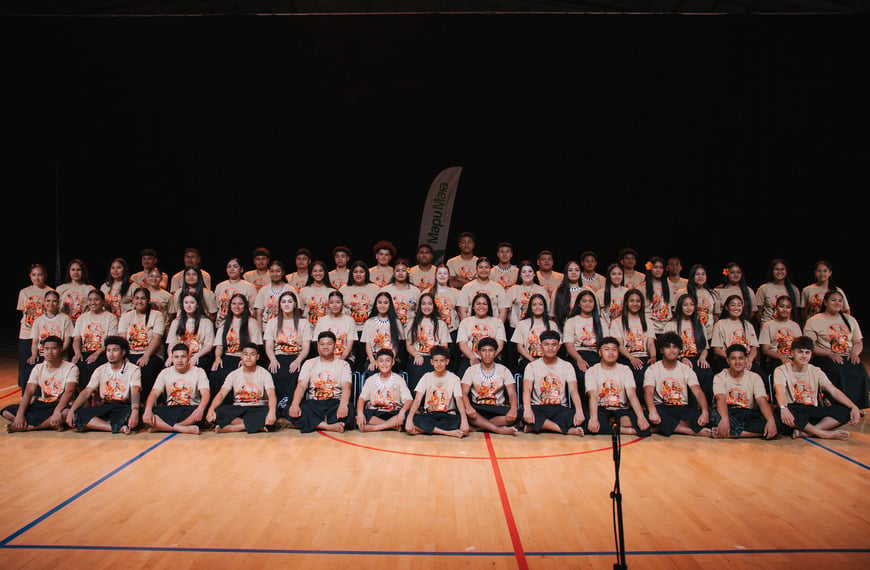
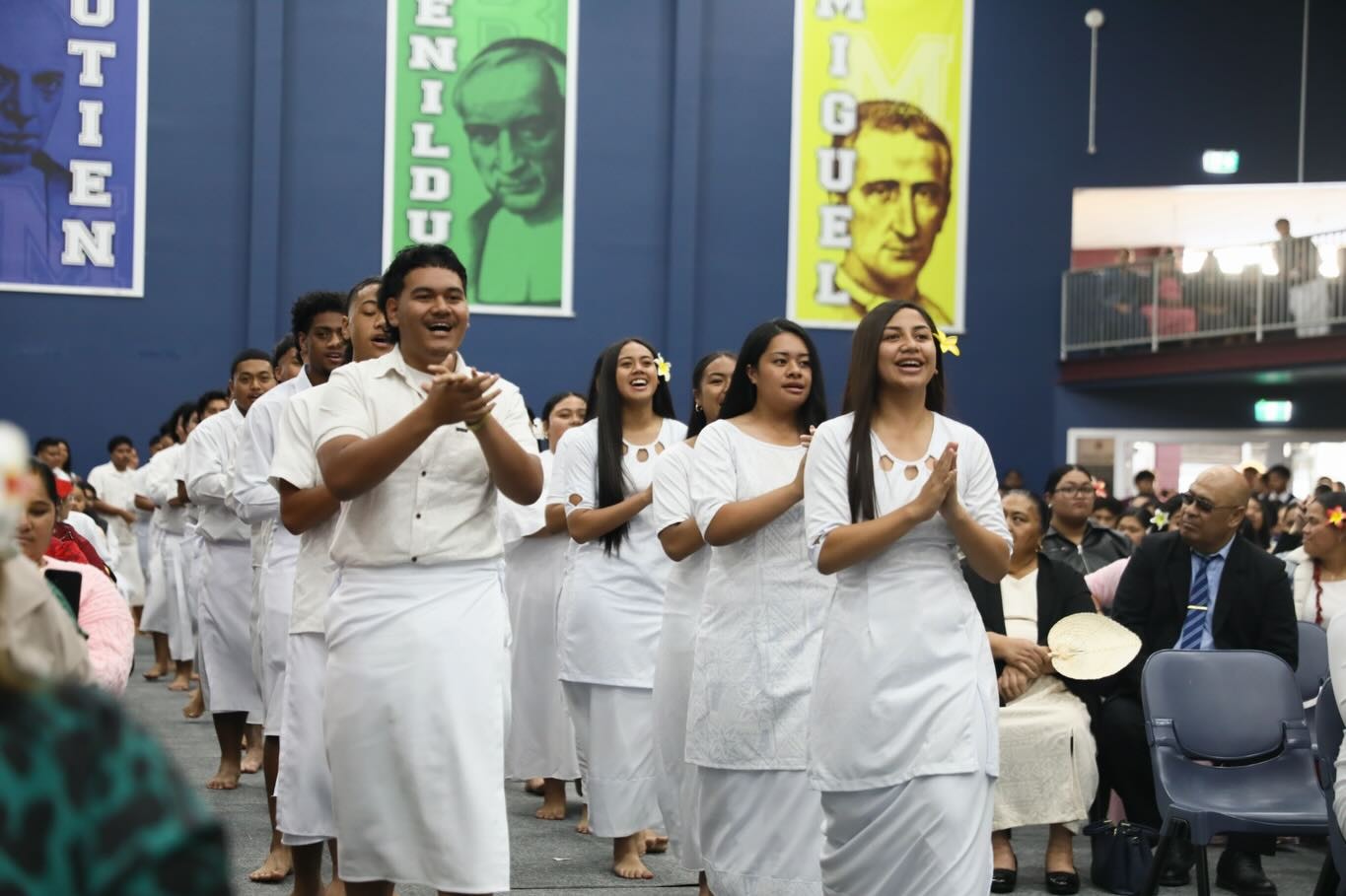
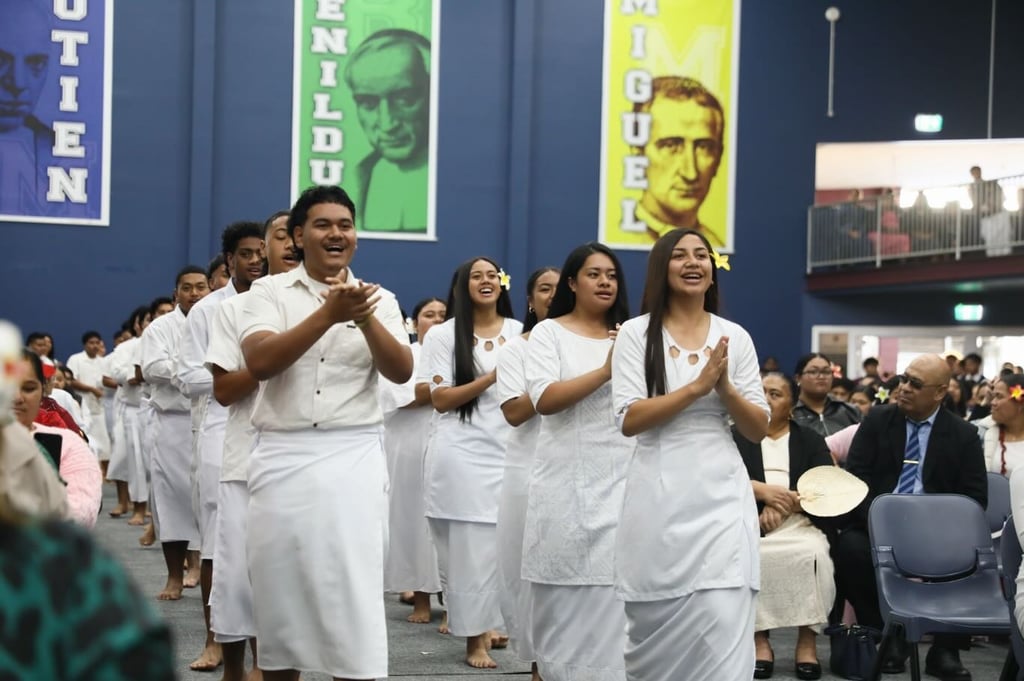
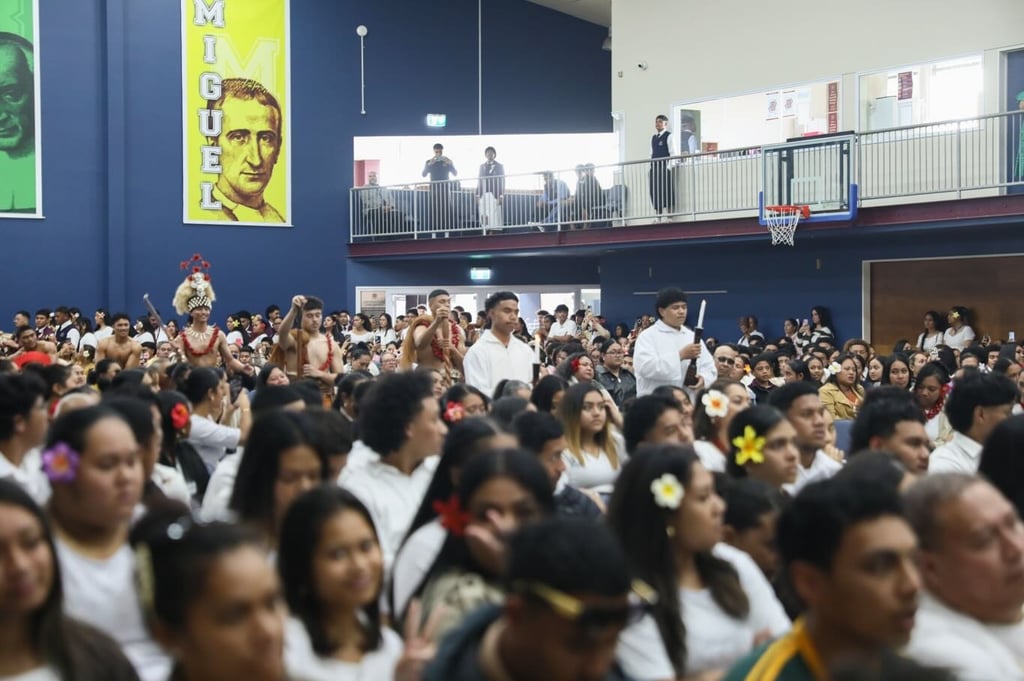
On Sunday, I attended a special mass service held at De La Salle College to mark the opening of Samoan Language Week for this year. In attendance were over 10 schools who include Gagana Samoa in their curriculum alongside their teachers, parents and families.
Led by Father Iosefa Euese, the service was also an initiative spearheaded by Fotu o Malama which is the association for teachers of Gagana Samoa in tertiary schools across New Zealand. Chairman of Fotu Malama, Tofilau Niulevaea Dr Siliva Gaugatao spoke at the event, highlighting the curriculum and pathway through Gagana Samoa at NCEA level in high schools.
He stated that a total of 74 schools in the country are teaching Gagana Samoa, with 65 teachers and 4325 students nationwide. A great example of creating mountains and knowledge that can help the future of Gagana Samoa here in Aotearoa.
To close off the service, each school performed an item in celebration of this year’s Samoan Language Week. Students also took part in the mass itself, utilising Gagana Samoa whether it was bible readings, prayers or being part of the choir.
Personally, I do believe such initiatives created by Fotu o Malama and workshops like Musu’s are what many Samoans abroad are in need of. Although they may not have the structure and setting of how things operate back in Samoa, creating opportunities and our own mountain of knowledge can help our future generation.
In today’s age, a lot of our young ones are exposed to many other mountains or streams that only provide trouble and mishap. Drugs, crime, gangs, violence and so much more have affected our youth and their future.
For this year’s Samoan Language Week, I hope it serves as a reminder for them to seek the mountain that nourishes their thirst for Gagana ma le Aganuu Samoa. I pray that our elders and those in higher spaces are able to create more opportunities and initiatives that help our youth learn.
There are so many resources online and everywhere that are available for guidance on fa’asamoa. It is just a matter of you seeking it and utilising it for your culture and language.
So, go and seek that mountain that flows with blessings! The mountain that holds its abundance in our Samoan culture and language.
Saili laia le mauga e te manuia ai.
Ia manuia le Vaiaso o le Gagana Samoa! Ia manuia lau sailiiliga!