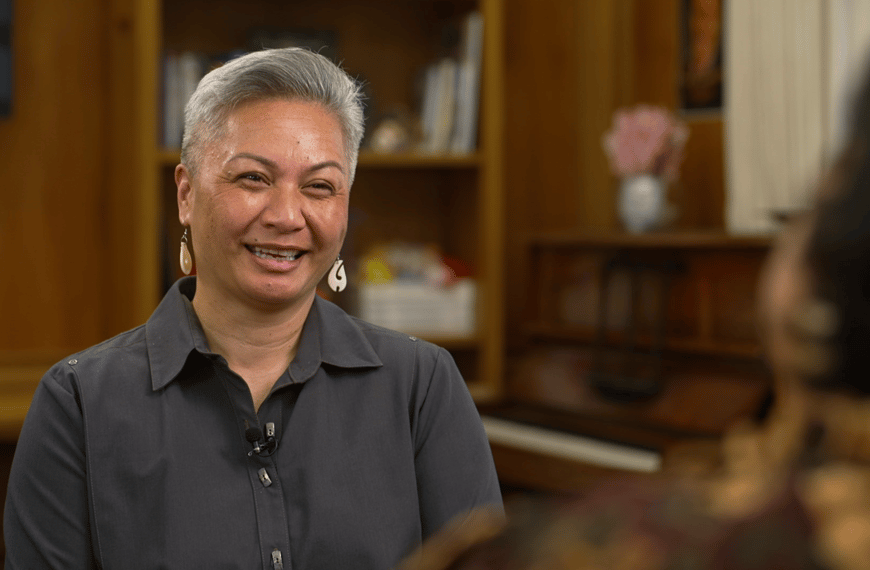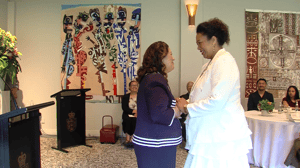
“I am not equipped with the skills for some of the issues that these kids come with, to be really honest. But why they come to me, is because they see someone that is close to their aunty, or sister or older sister” – Teacher Ana Tolovaa
For as long as he has been a teacher, Faavevesi Talamaivao understands that to create successful students you have to create safe environments for them to learn.
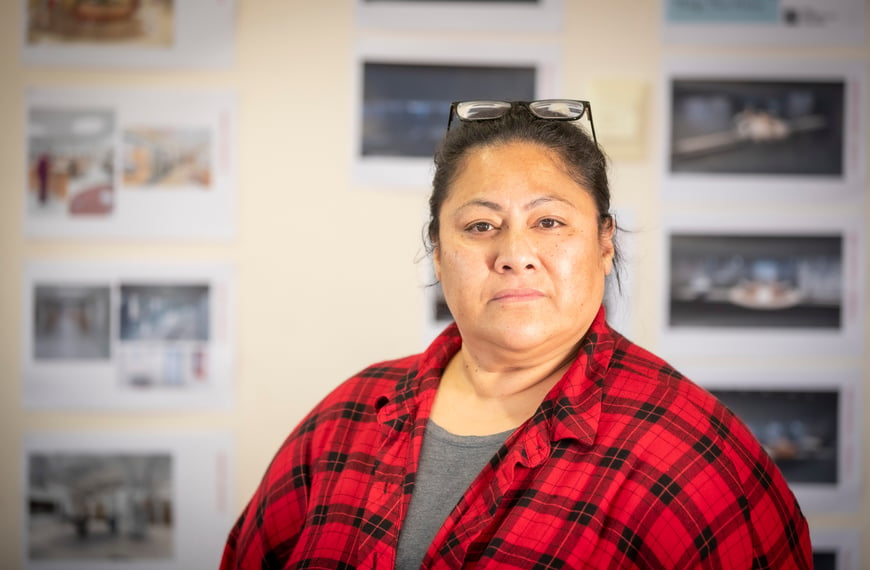
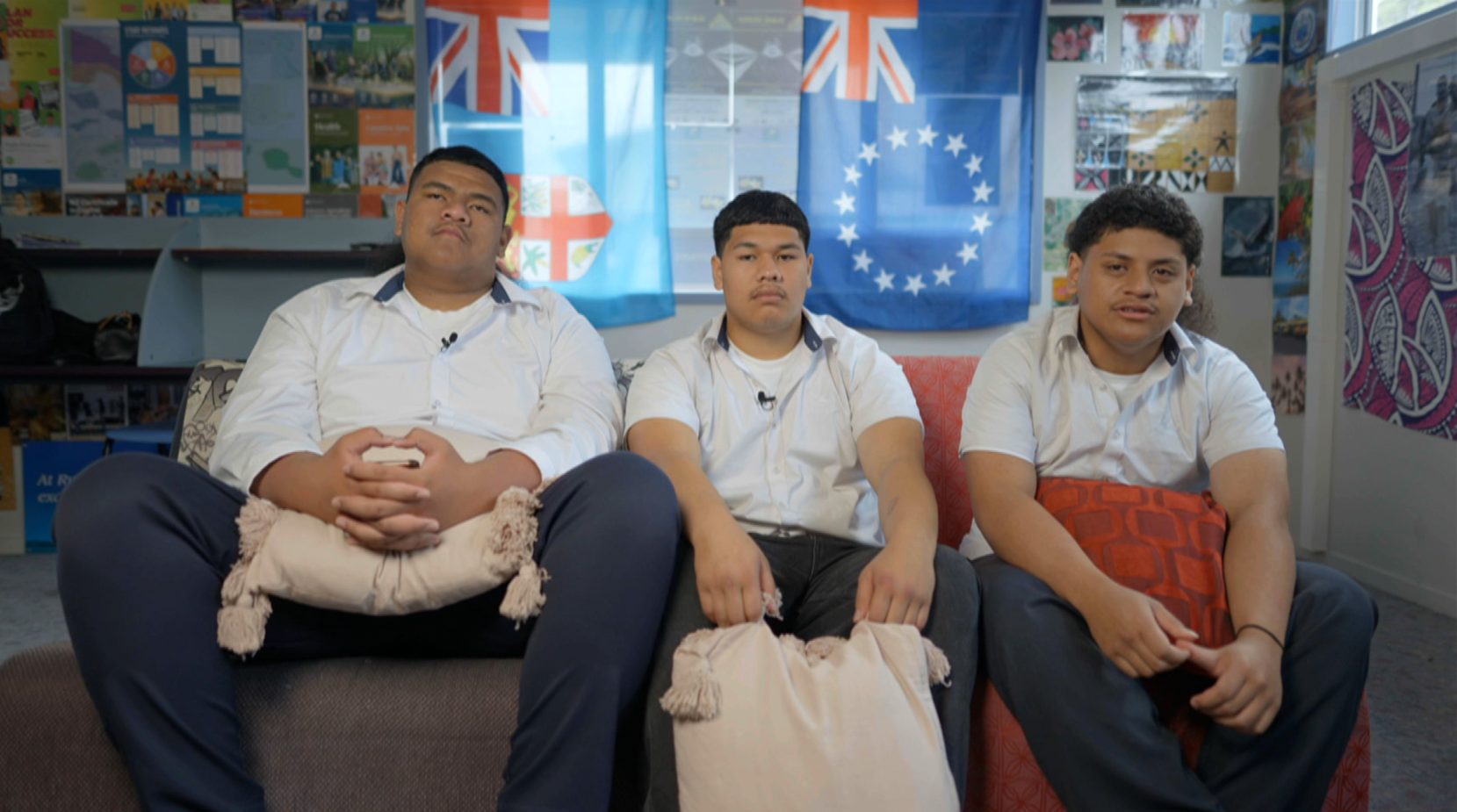
At Rutherford College, that safe space is the Pasifika Room, a dedicated space which Talaimavao monitors daily to allow Pasifika students to occupy it for study or just to take a break.
A big part of making it a comfortable and relatable environment is how the room is decorated, hoping to give inspiration to the kids. Posters, photos, pathway brochures and pamphlets are just a few examples of what you can find there.
“We’re lucky and blessed to have this space. I talk to my friends at other schools they don’t have a space like this. So we’re lucky to have this space for over five years,” he says.
“It’s just about supporting our kids.”
For senior student Jadyn Falo Fai, the Pasifika Room is where he can find students whom he can share with in personal and school matters.
He uses it as a chance to catch up with friends and talk about everything and anything.
“Mostly when I am around these guys, I can really speak to them about what’s going on in life. I really like being around people who get me,” Jadyn says.
For Caroline Fonua, the space becomes a way to help catch up on her studies and with her classmates and peers.
“I think that learning individually is possible but it’s difficult especially when you don’t have people to discuss with,” she says.
“At school I like being around my friends and people I can talk to about the things that I am interested in and the things that I am learning.”
With an increase in Pacific students every year, having such a space is essential within any learning environment.
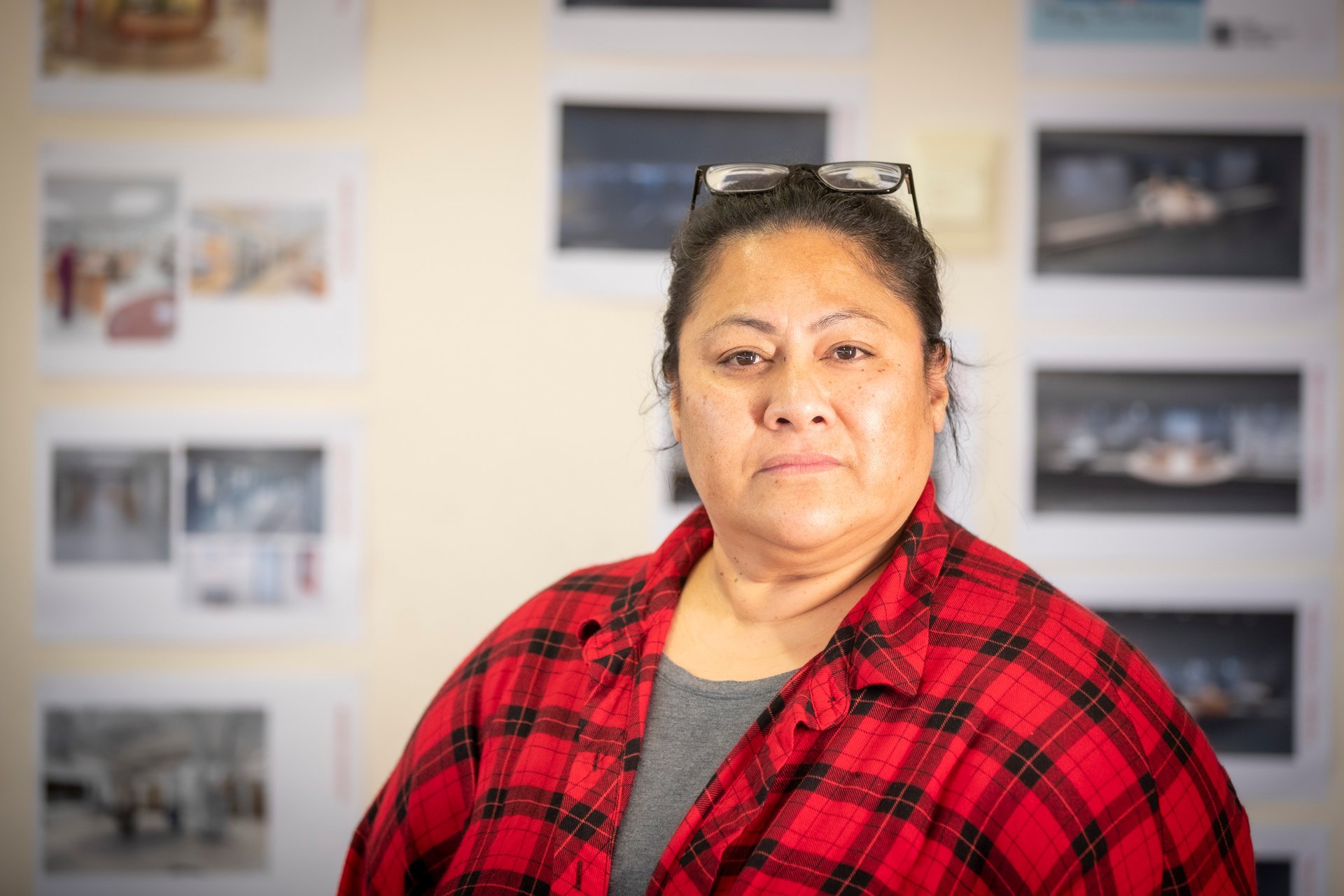
For Ana Tolovaa, being a teacher for four years now has made her realise the need for more Pasifika teachers to cater for and understand the needs of our Pasifika students.
“These kids are very different. And they are different every year from Year 9 to 13. They come with challenges obviously, that comes with every other job. But since I have now been teaching for four years, I have noticed the huge need for our PI kids, especially in this time and era,” Tolovaa says.
Issues being discussed daily for most students not only involve school matters but outside and personal issues and Tolovaa says one of the major ones involved students having to drop out of school to find employment to support their families.
Jadyn says that, on top of his school work, he also has to be a provider and caretaker for them.
“I usually take care of my brother’s kids, when he is at work and his missus is busy, so yeah just to look after them. On the weekends I usually go to church to set up for church services,” he says.
His fellow classmate Siliva Tui also agrees, as he too has outside commitments from school making sure to provide for his family.
“I mostly take care of my mom and my little brother because my dad is in a different country at the moment,” Saliva says.
“Just making sure my parents have a smile on their faces every time I achieve something in school and just being a role model for my little brother so that he can do good in school as well.”
Being a teacher, especially of Pasifika heritage, Tolovaa says her job requires more than just being inside of the classroom.
“I am not equipped with the skills for some of the issues that these kids come with, to be really honest. But why they come to me, is because they see someone that is close to their aunty, or sister or older sister,” Tolovaa says.
“And sometimes, the situations or scenarios that they come with, I get gobsmacked. Because they are only 15, 16 and they are going through it and on top of their schooling.”
But amid the challenges and barriers there is hope as students are willing to make a stand and make changes on their own.
Fonua and classmate Tesia Autagavaia both are looking towards tertiary study, hoping to pave careers that can help make change for the better within their communities.
“I think about what I am studying next year which is a joint course of Commercial law and Philosophy with a specialisation either in Anthropology or Pacific studies. I think the route that I can go with is policy or risk management and incorporate governance and things like that,” Fonua says.
“It seems like making a change is impossible but when people are like, there is no point in trying, then it creates this mindset that if I can’t do that then nothing else can be achieved. So I am going to give it my best shot anyway.”
Having seen the struggles and barriers first hand as a student, Autagavaia is determined to also make a change in the future.
She added, “ I am hoping to do a conjoint in Law and Pacific studies, mostly like constitutional law. I’d really like to be an MP… It does not have to be an MP, but I just want a job in the future where I can actually help my people.
“I have seen the struggle through my friends, and family and I want to help so my people can be heard. How else can I be heard when I am not in the room where the people that will listen will be there?”
Listening to the people and the communities is what Tolovaa also wants to reinforce for the leaders of the country and those heading the Education sector.
With elections coming soon, where our future leaders will be chosen, She hopes that people who can hear the struggles and barriers of her students can be those who step into power.
“Communities are a huge thing for any Pacific livelihood so if you can fund that then it will flourish into something better.
“Just listen to the communities and allow the community leaders and those who are experts around particular areas especially like education you know to use them to your advantage because there’s an abundance of those with skills and qualifications.”