“It’s really important rugby should reflect the communities that we serve, and our communities have queer people” – Jay Vaeluaga Faata
They’re more than just a rugby club.
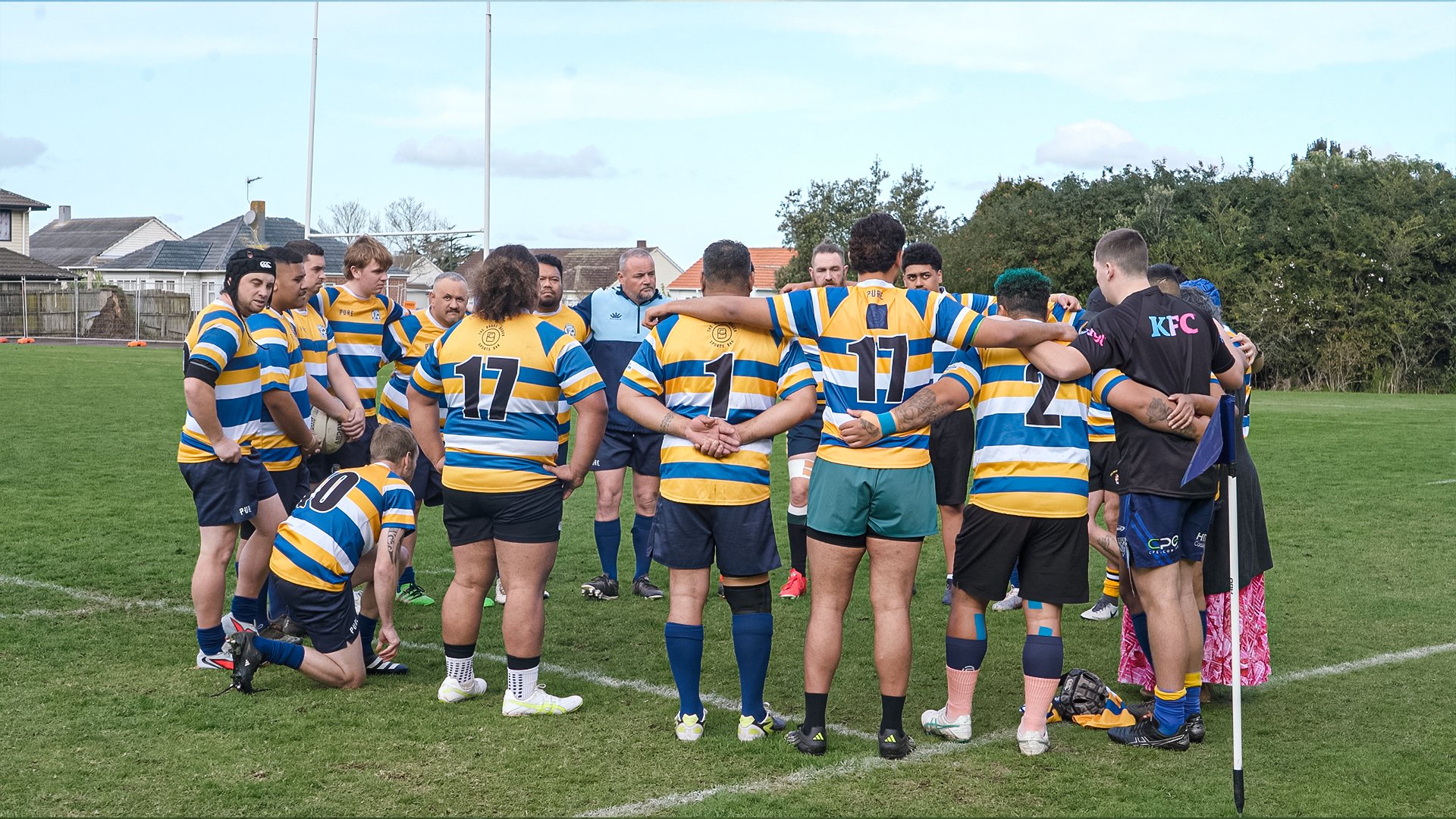
As Auckland’s first Pasefika-led inclusive rugby team, Te Papapa Wolves are redefining what it means to belong on and off the field.
Based in Onehunga, the club is dedicated to building a space where rainbow Pasifika players, alongside people of all ages and abilities, can unite to play rugby and create an inclusive, supportive community.
For co-founder Jay Vaeluaga Faata, rugby has always been a part of his childhood.
“I grew up in Samoa so rugby was like everything,” he says.
“Every kid in the island dreamed of playing in the All Blacks or for the Manu Samoa.”
But as a proud gay man, he says rugby did not always feel like a space where everyone could be themselves.
“I feel like rugby is at its best when it is inclusive. It’s for everybody,” he says.
“It’s really important rugby should reflect the communities that we serve, and our communities have queer people.”
The Wolves took to the field earlier this year, and what started with fewer than 10 players, has now grown to a team of more than 40. This growth has brought together generations, with the youngest player, aged 16, playing alongside his dad, while the oldest is in his 50s.
For first-time player Den Habana, being a part of the Wolves extends beyond learning the game.
“This is a healing journey for me. I’ve always just been scared of our Pacific men, but they’ve embraced me so much,” Den says.
But creating a space where everyone belongs is also about confronting the reasons some people have felt they didn’t belong on the field in the first place.
“There’s a stigma around gay men that we’re soft and they’re sort of likened to women,” Den says.
“I feel like I’ve surprised a lot of the men in our team because I’m this very shy and soft person, but when it comes to the rugby field, I’m very fearless and I think that really encompasses what our Takatāpui men and community are.”
Jay adds that people naturally assume an inclusive team is “a walkover team, but we actually turn up and pull up. We play some really good rugby.”
The team competes in the President’s social grade, where it has built positive relationships with other clubs who have embraced them wholeheartedly.
“We’re very blessed and lucky that we haven’t experienced [homophobia] but I know that there will come a time that those things will happen,” Jay says.
“People will always judge… it’s important for us to develop an inclusive, safe culture of acceptance and tolerance so that they don’t experience that in our club despite what people say outside of our club.”
For Coach John Hall, stories of high-profile players coming out, like former Warriors rugby league player Kane Evans, highlighted the need for better support in professional rugby.
“Society as it is now, it’s that fear of being seen different… (the) few players that have come out to be gay in recent years has been great,” John says.
“It would be good if there was someone who’s currently playing able to come out and show. Sometimes, it’s a bit hard to hear they’ve had to play under that illusion of trying to fit into what is the norm, and hearing the stories of what they went through is really hard to take.”
For the Wolves, inclusion is not about lowering the standards. It’s about proving there’s room on the field for everybody to play rugby.
“I think we hear on TV and all that stuff that you know, Pacific men have not been very, strong advocate or support for Takatāpui, but our team is an example that our people are backing us up a hundred and you know, we’ll continue this legacy until the next wave of young takatāpui’s to come through,” Den says.