“Hepi, his mum, became quite vital in the sense of the storytelling and so I think, for me, you know, this film is about honoring mums and the role that they play in our lives,” – Vea Mafileo
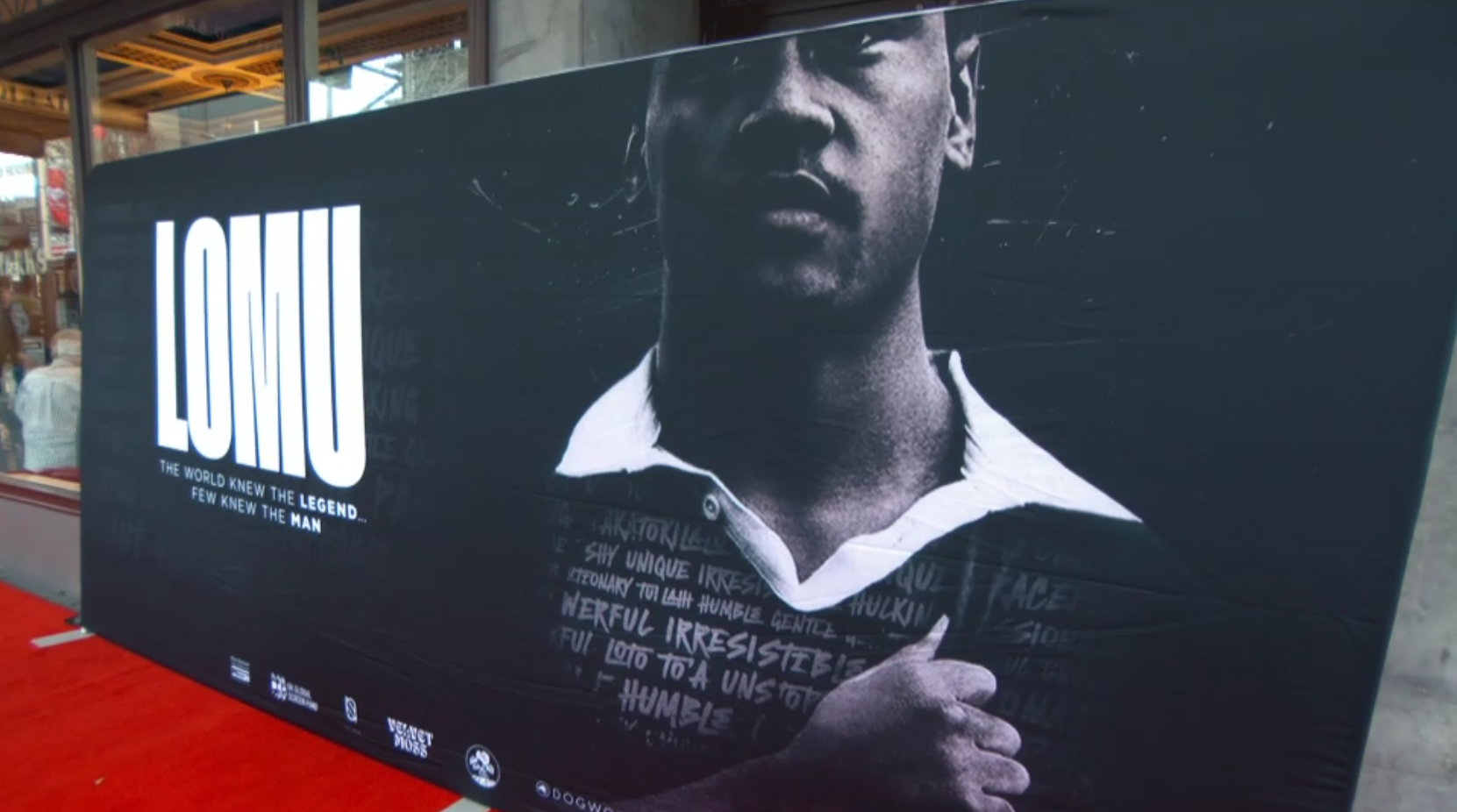
A new documentary on the late All Black legend Jonah Lomu hit theatres this week.
Filmmaker, Tongan Vea Mafileo, who co-directed “Lomu” said that working on the documentary was quite revealing.
“Coming into this, I knew that obviously his story was quite complicated. You know, it’s not that Jonah himself is a complicated person because he’s not. He was humble and he was passionate about playing rugby,” Vea says.
The documentary has interviews with a range of people from coaches and players to friends and family along with a substantial archive of family footage, thanks to Jonah’s brother John.
“I was really blessed because his brother John, he has been collecting, like, all the home footage and all of his stuff, for a number of years,” Vea says.
“I think he’s just kind of been waiting for the right opportunity, to be able to share these valuable, super valuable, assets with the right person.”
This old footage touchingly shows Jonah’s mother Hepi fanatically cheering him on from the sidelines at numerous games throughout high school and his professional years. As a mother herself, this struck a chord with Vea.
“Hepi, his mum, became quite vital in the sense of the storytelling and so I think, for me, you know, this film is about honoring mums and the role that they play in our lives,” she says
Vea has a number of short films and documentaries to her credit including “Lea Tupu’anga: Mother Tongue” starring Tongan actor Luciane Buchanan, and “For My Father’s Kingdom”.
These films all pull at the heart strings and her body of work has enabled Vea’s to be recognised in the industry by being invited to join the Academy of Motion Picture, Arts and Sciences.
Vea says we need to take control of our narrative.
“There’s so many of us and also we’re like the last untapped region of the world from the Hollywood sense of stories,” she says.
“So, if we’re not, if we don’t have a seat at the table to make sure that our stories are being authentic, then Hollywood is potentially going to come in and do what Hollywood always does.
“So we need to upskill everyone for us to be able to have a seat at the table.”